
SER-Europe was glad to take part in the kick-off meeting of the Isla Bonita project, held from 21 to 23 September in La Palma, Canary Islands, marking the start of a five-year international collaboration to restore the ocean and waters around Europe’s islands.
As the project’s official press release announced, Isla Bonita brings together 51 organisations from 16 countries to deliver nine demonstrations on nine islands across three sea basins: the Atlantic-Arctic, the Mediterranean, and the Baltic and North Sea. Coordinated by the Oceanic Platform of the Canary Islands (PLOCAN), the project runs from September 2026 to August 2031, with €16.2 million from Horizon Europe under the EU Mission “Restore our Ocean and Waters by 2030.” You can read the full press release here.
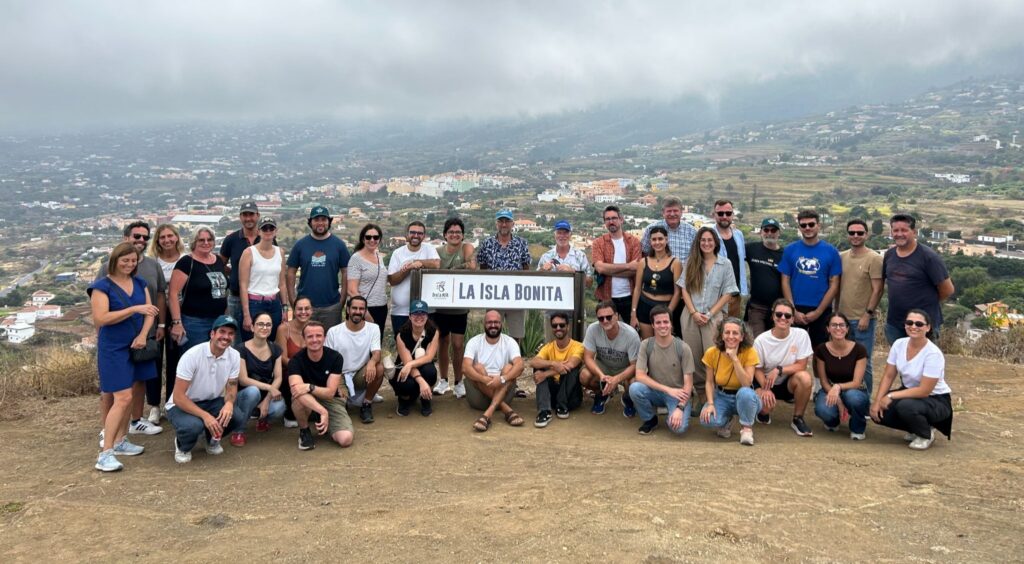
Project partners visiting the Isla Bonita viewpoint. (23 Sept. La Palma)
About the project
Isla Bonita (Beautiful Island) supports EU islands to achieve the objectives of the EU Mission “Restore our Ocean and Waters.” Islands face a mix of pressures made worse by climate change, biodiversity loss, and pollution, and few have the technical or financial capacity to respond alone. The project’s answer is to put island authorities at the centre: on each island, a Living Lab brings together authorities, fishers, businesses, researchers, schools, investors, and residents to shape a local demonstration and co-create a long-term roadmap to restore the island’s seas and waters, and a plan to fund it. The nine demonstration islands are La Palma (Spain), Guadeloupe (France), and the Azores (Portugal) in the Atlantic-Arctic; Ischia (Italy), Santorini (Greece), and Malta in the Mediterranean; and Orkney (United Kingdom), Bornholm (Denmark), and Gotland (Sweden) in the Baltic and North Sea.
SER-Europe’s role
Within Isla Bonita, SER-Europe will take an active role in training the Living Labs and their stakeholders, principally on the Ecological Recovery Wheel and the Social Benefits Wheel. We will also support knowledge exchange between partners by organising a series of webinars and a podcast series.
The kick-off meeting was a valuable opportunity to get to know a diverse consortium, connect with the Living Labs from several countries, and better understand the needs around capacity building, as well as the aspirations of this ambitious collaboration.
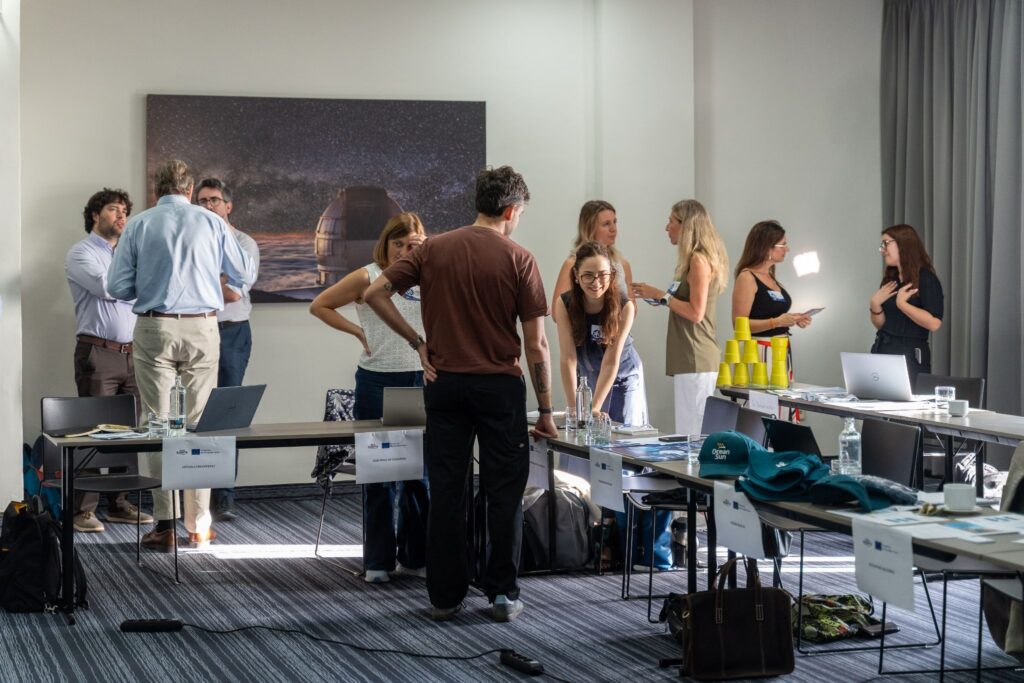
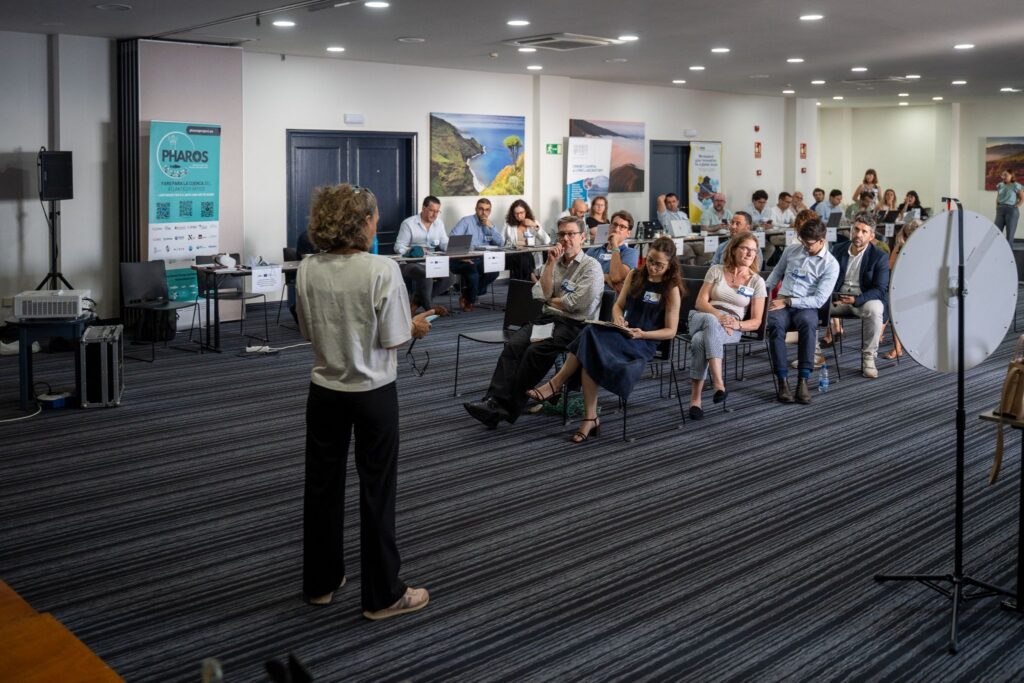
Partners pitching one by one about their organisations and allocated tasks in the project, while also discovering further synergies. La Palma, 21 Sept.
Alongside brainstorming sessions and pitch presentations from partners and demonstration islands, participants also had the chance to discover La Palma itself, visiting the Tajogaite volcano, the island’s highest point at Roque de los Muchachos, and its observatory. These field visits offered both a first-hand experience of the island’s landscapes and a more informal setting to talk with partners and plan future collaboration.
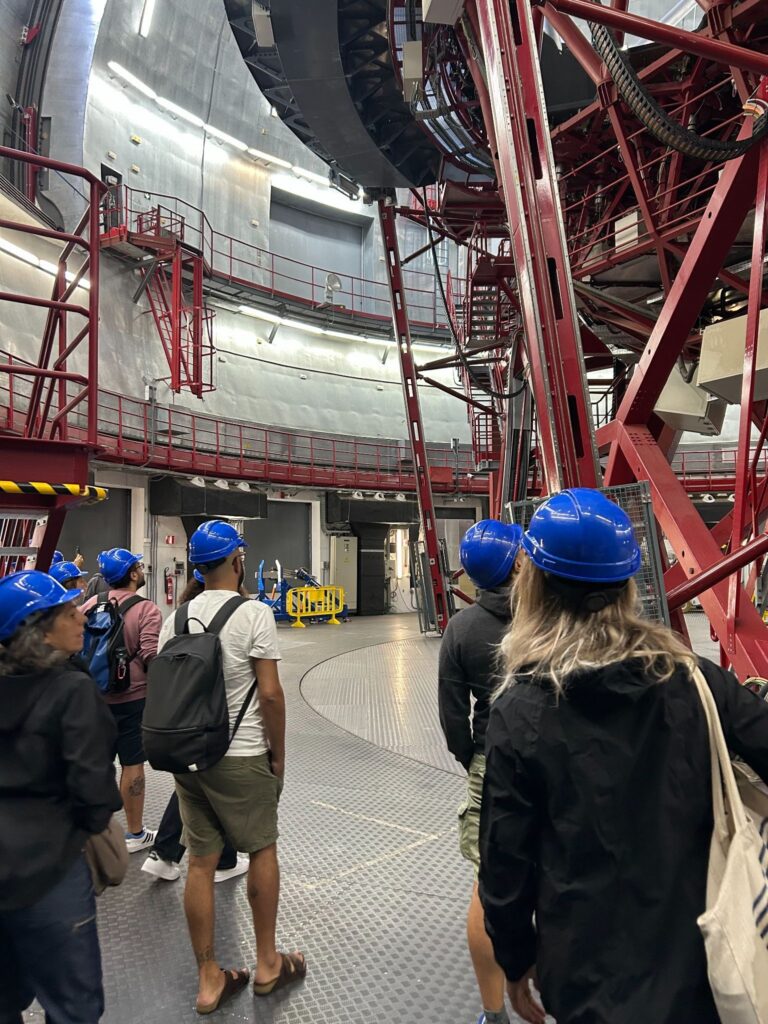
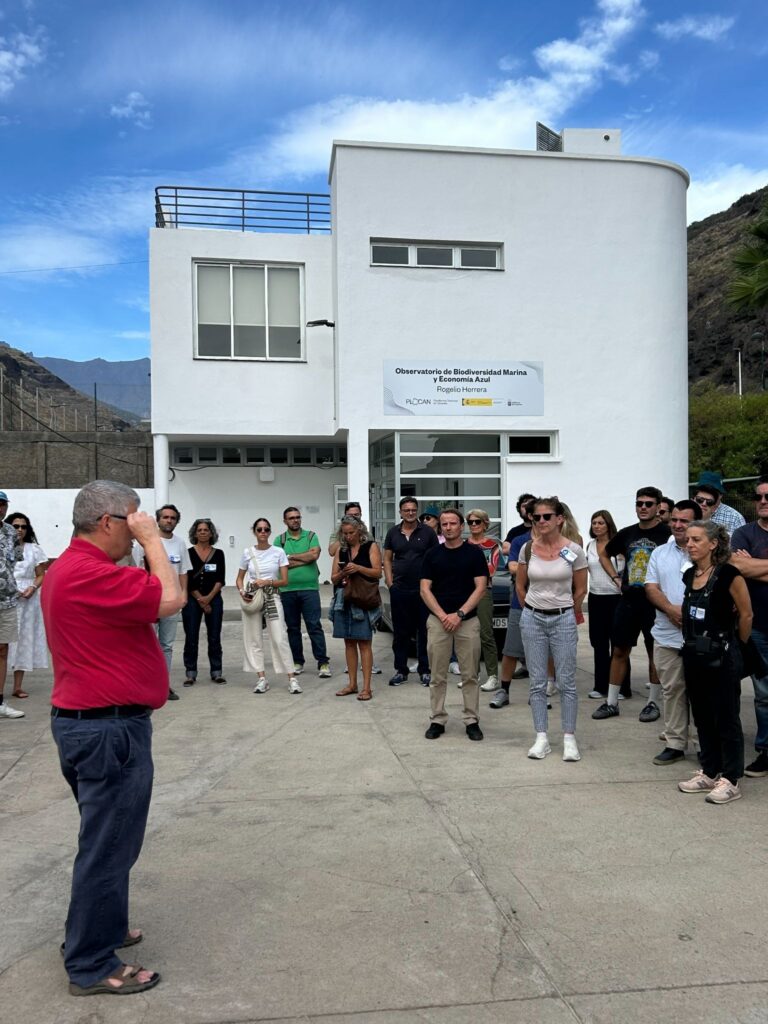
Project partners learning about the Observatory (left) and about one of the living labs at PLOCAN in La Palma (right), La Palma 21 Sept.
The first EU Ocean Pact Congress
The kick-off was followed by the first Congress of the EU Ocean Pact, held in Gran Canaria on 24 and 25 September. The Congress was an important opportunity to learn more about the EU’s vision for the ocean, and to see how islands such as the Canaries are planning to implement blue economy initiatives to better protect and conserve marine resources.
For SER-Europe, the discussions underlined the need for training on the social aspects of marine conservation, and the importance of helping to fill gaps in data and knowledge, in line with the EU’s strategies for islands and coastal communities.
Looking ahead
The kick-off marks the beginning of SER-Europe’s contribution to Isla Bonita over the coming years. We look forward to supporting the Living Labs, sharing knowledge across the network, and helping to build capacity for restoration across Europe’s island communities.
Isla Bonita is funded by the European Union under Grant Agreement No 101295861 (HORIZON-MISS-2025-03-OCEAN-06), part of the Horizon Europe Mission “Restore our Ocean and Waters by 2030”, and managed by the European Climate, Infrastructure and Environment Executive Agency (CINEA). Views and opinions expressed are those of the author(s) only and do not necessarily reflect those of the European Union or CINEA. Neither the European Union nor the granting authority can be held responsible for them.