
SER-Europe, together with the REDRESS project and the LIFE MAPPER project, is pleased to announce the release of two new policy briefs on marine ecosystem restoration in Europe. Both are now available open access in SER-Europe’s Zenodo repository.
Europe’s seas hold a rich diversity of ecosystems, from seagrass and algal forests to deep-water corals, that provide vital services and benefits to society but are increasingly undermined by human pressures. The two briefs make the case that marine ecosystem restoration is both feasible and worthwhile, and set out how to scale it up.
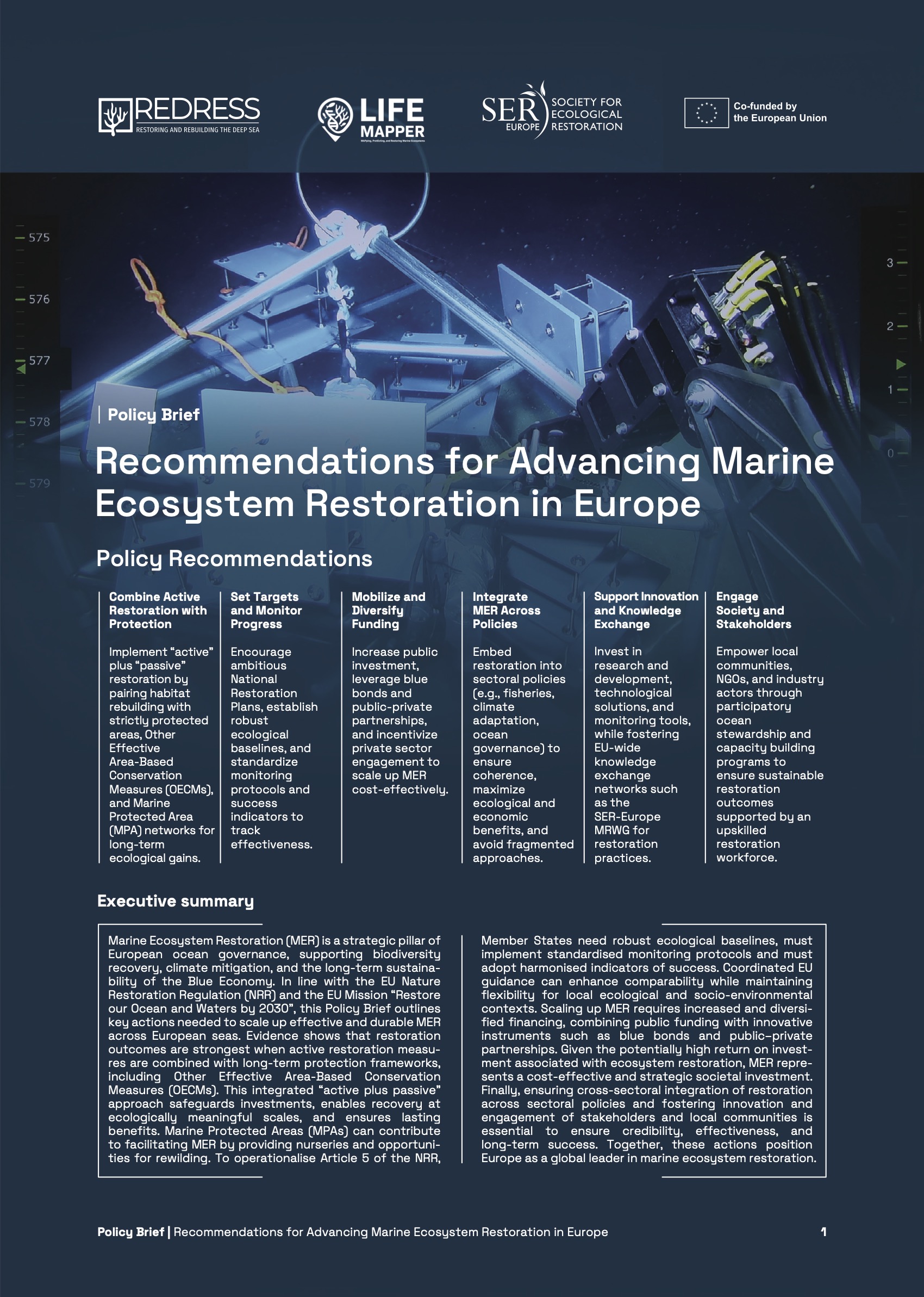
Recommendations for Advancing Marine Ecosystem Restoration in Europe turns to implementation. It finds that outcomes are strongest when active restoration is combined with long-term protection, an integrated “active plus passive” approach that protects investment and enables recovery at meaningful scales. To deliver Article 5 of the Regulation, it calls for robust ecological baselines, standardised monitoring, and harmonised indicators of success, supported by coordinated EU guidance and diversified financing, including instruments such as blue bonds and public-private partnerships.
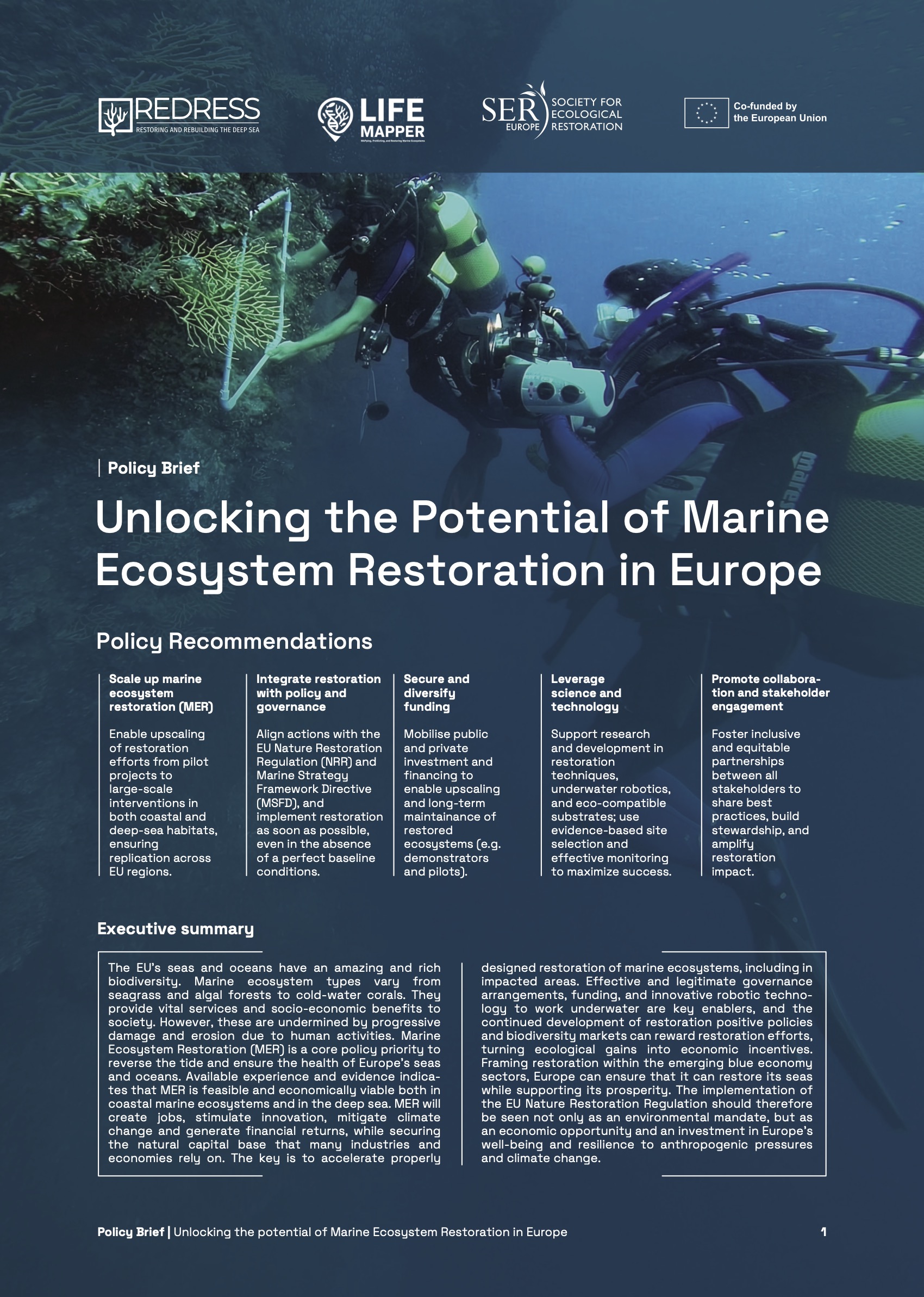
Unlocking the potential of Marine Ecosystem Restoration in Europe frames restoration as an economic opportunity as much as an environmental one. It shows that restoration is achievable and economically viable in both coastal and deep-sea ecosystems, and that it can create jobs, stimulate innovation, mitigate climate change, and generate financial returns while safeguarding the natural capital that economies depend on. Effective governance, sustained funding, and innovative underwater technology are identified as key enablers, positioning the EU Nature Restoration Regulation as an investment in Europe’s resilience and prosperity.
Together, the briefs offer policymakers and practitioners a clear, evidence-based case for accelerating marine restoration across European seas, in support of the Nature Restoration Regulation and the EU Mission to Restore Our Oceans and Waters by 2030.