
15th European Conference on Ecological Restoration | Brest, France | 24–28 August 2026
Organised by Université de Bretagne Occidentale (UBO), SER-Europe, and REVER. Theme: Plan for Tomorrow, Restore Now.
From 24 to 28 August 2026, more than 650 researchers, practitioners, policymakers, and students from 52 countries gathered in Brest for five days of science, policy, and practice, closing with a shared Conference Declaration on the climate and biodiversity crisis.
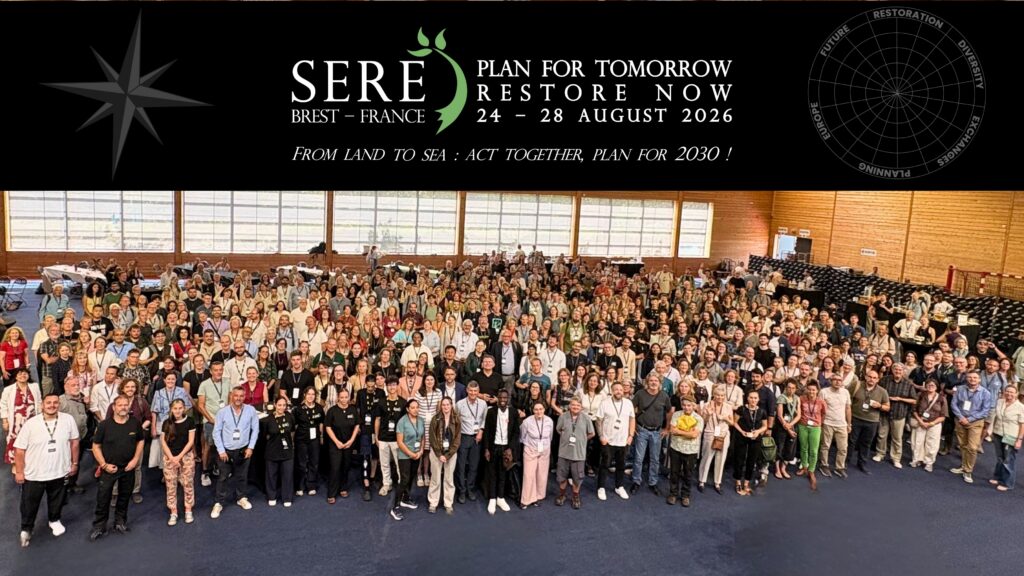
Five days bridging science, policy, and practice
Across six plenaries, more than 350 sessions, over 100 posters, and 13 field trips, delegates shared the latest science and practical experience on restoring Europe’s wetlands, rivers, forests, agricultural land, cities, coastlines, and seas. The conference took place at a pivotal moment, as EU Member States prepared to submit their National Restoration Plans under the Nature Restoration Regulation, and that context ran through the entire week.
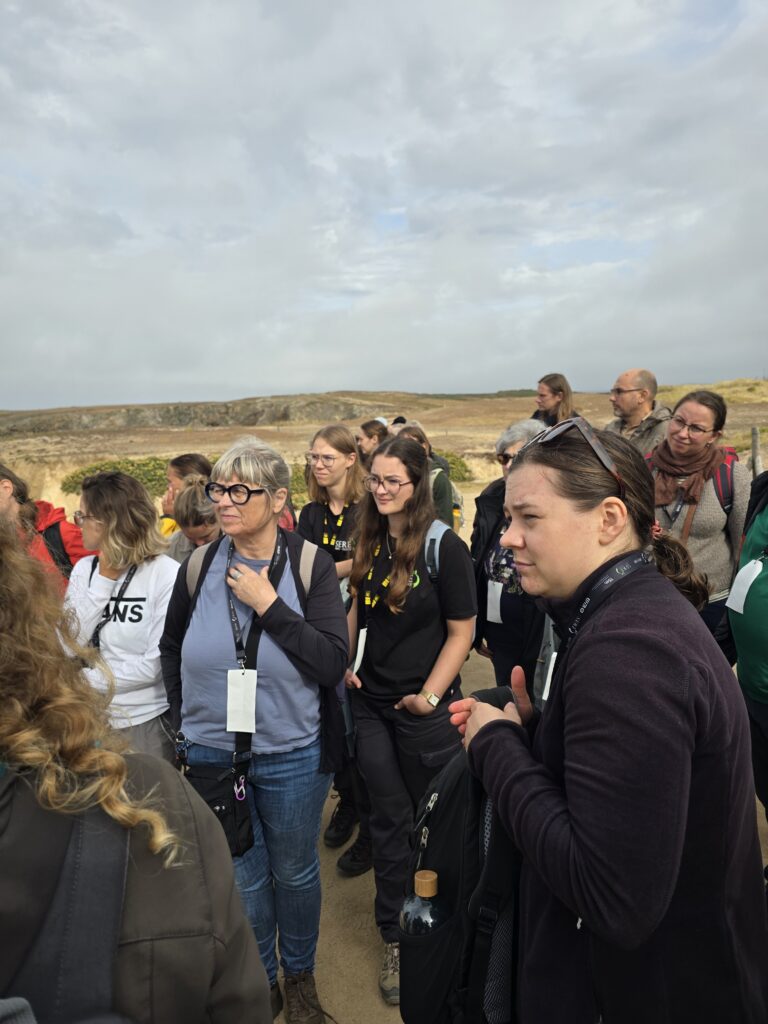
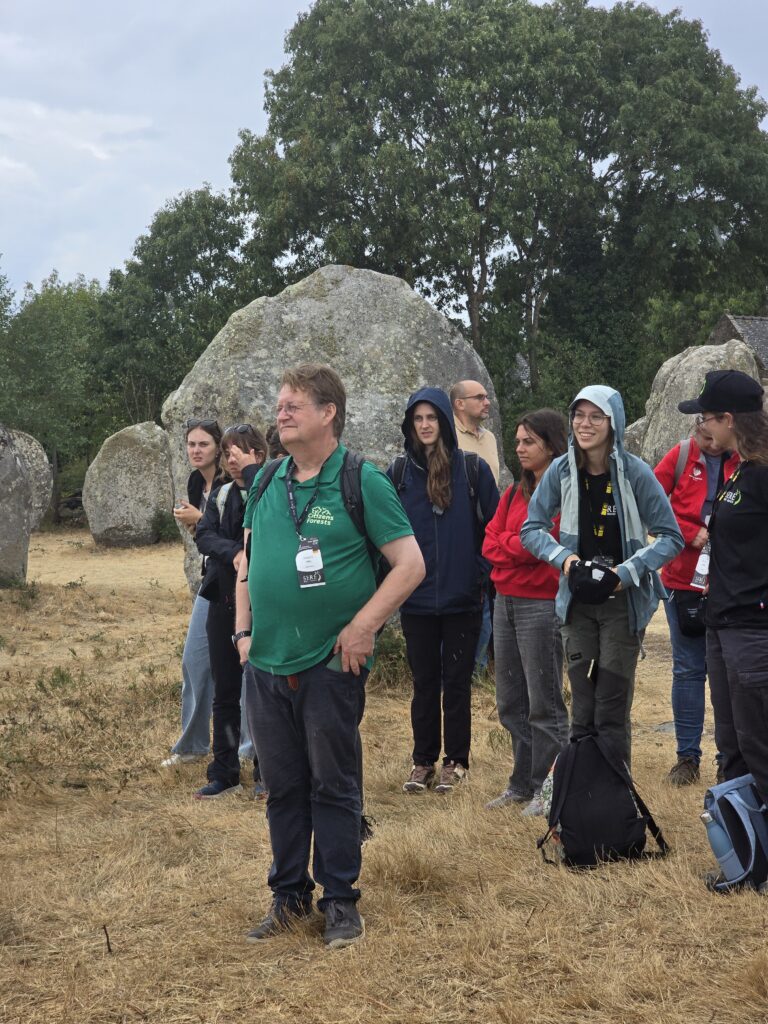
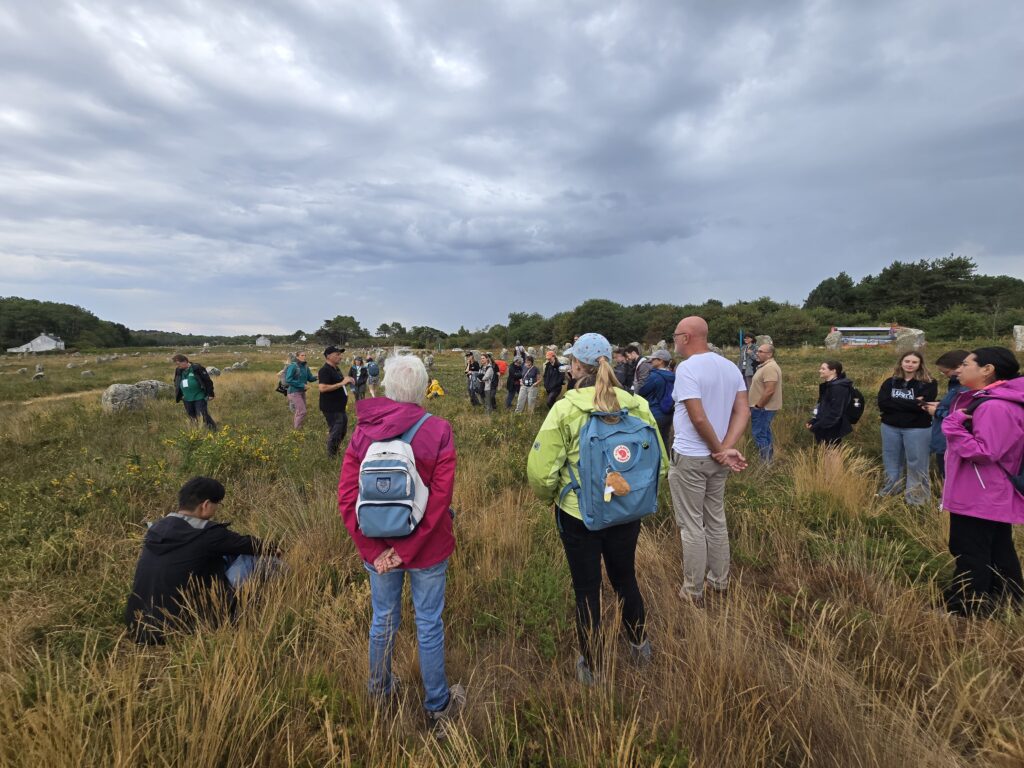
Field trips across Brittany brought science into the landscape, from coastal dunes and depoldered marshes to peatlands, rivers, and the restoration of the night sky itself, showcasing one of Europe’s most engaged regions for ecological recovery.
The plenaries
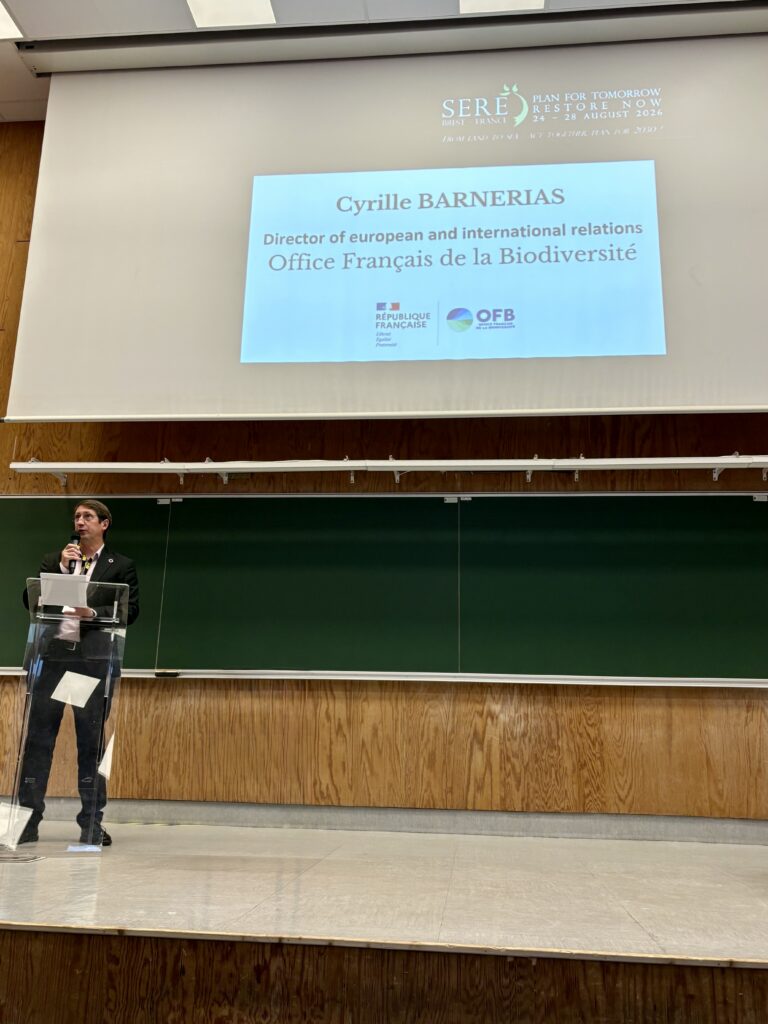
The conference opened with a welcome from the Université de Bretagne Occidentale, REVER, SER-Europe, and Cyrille Barnérias, Director of European and International Relations at the Office français de la biodiversité.
From law to landscapes. Angelika Rubin of the European Commission traced the journey of the EU Nature Restoration Regulation from law to landscapes, and where its implementation stands today, drawing on her role in the Commission team behind the Regulation.
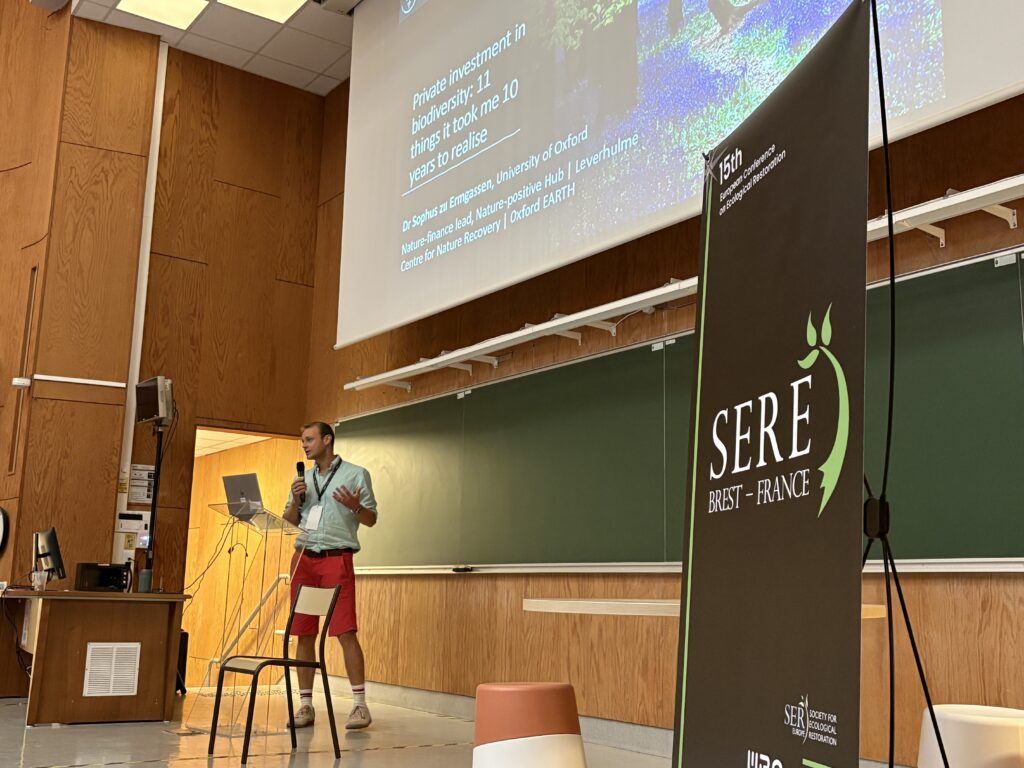
Restoration finance. Sophus zu Ermgassen of the University of Oxford followed with a clear-eyed look at restoration finance, sorting fact from fiction on private investment in nature.
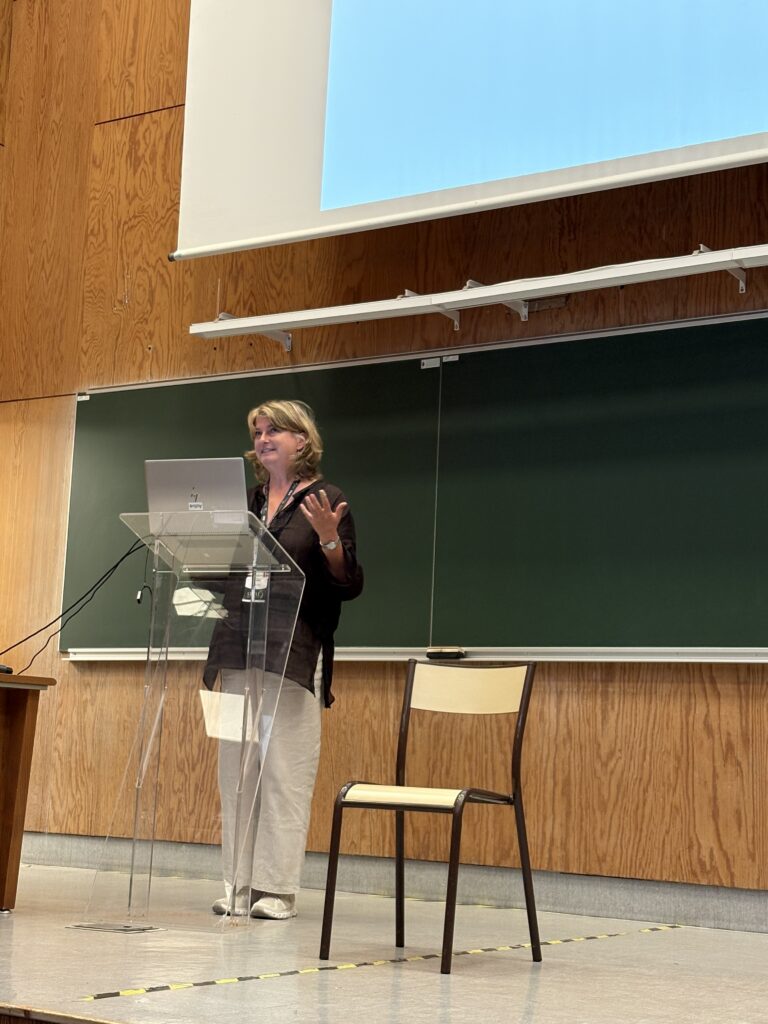
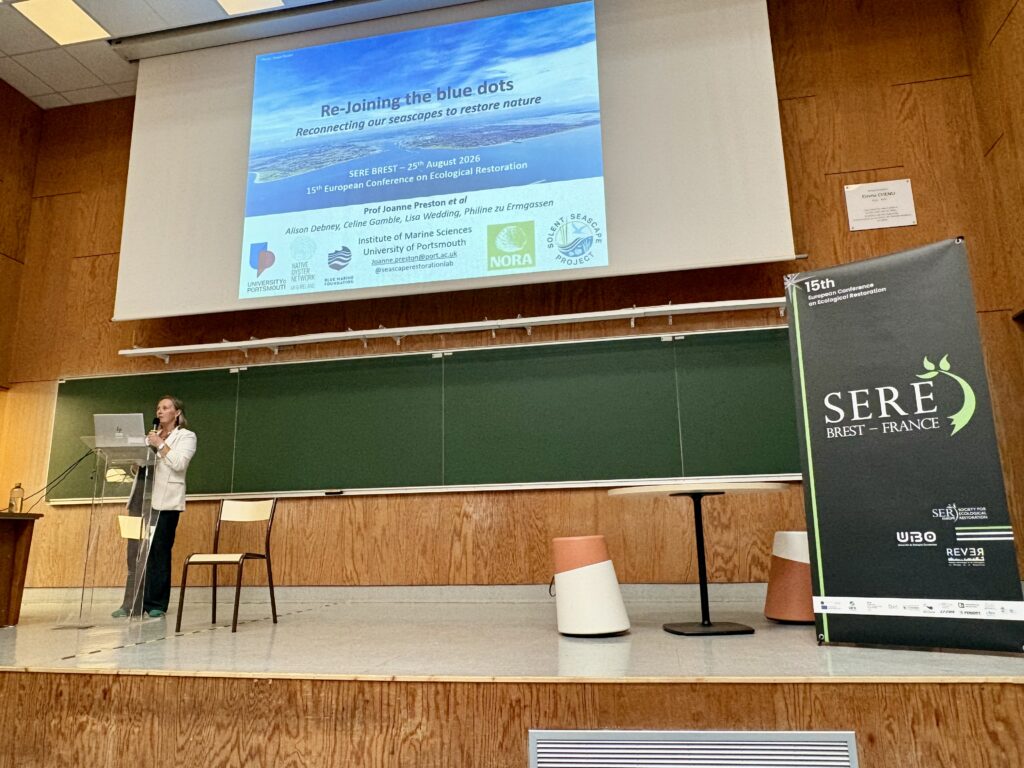
Seascape connectivity. Professor Joanne Preston, who leads the Centre for Seascape Restoration at the University of Portsmouth and chairs the European Native Oyster Restoration Alliance, made the case that marine ecosystems are connected through the flows of nutrients, carbon, and biodiversity that sustain them, and that restoring this connectivity is crucial to recovery.
“To reverse this trend we need bold and effective actions,” she told a full auditorium. “If we’re going to achieve a healthy, resilient ocean where marine ecosystems are understood, protected, and managed, and deliver our climate sustainability goals, we need to restore at seascape scales.” – Professor Joanne Preston
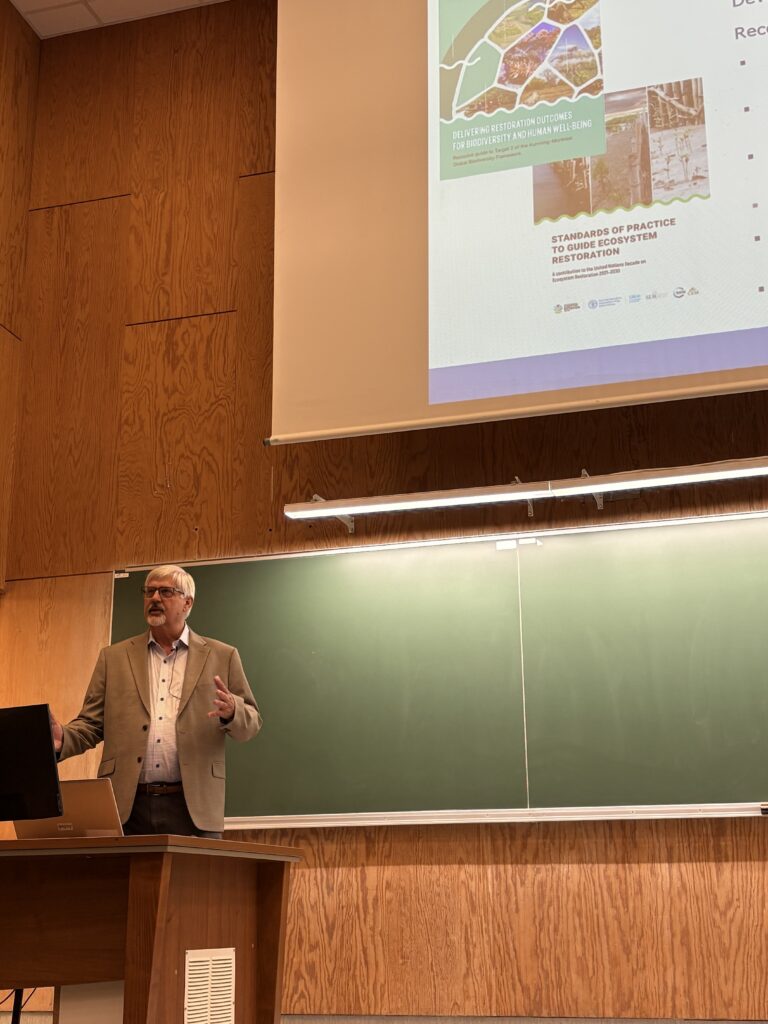
The SER Standards, Third Edition. George D. Gann, SER Global Policy Lead and lead author, presented the third edition of the International Principles and Standards for the Practice of Ecological Restoration: what has changed, and why it matters for Europe and the world.
“Europe has influence around the world,” George Gann said. “The Standards are crucial for supporting the EU’s role in restoration. There’s tremendous capacity here, and together with the Standards, Europe can have a huge impact on how we address degradation and the recovery of ecosystems around the world.”
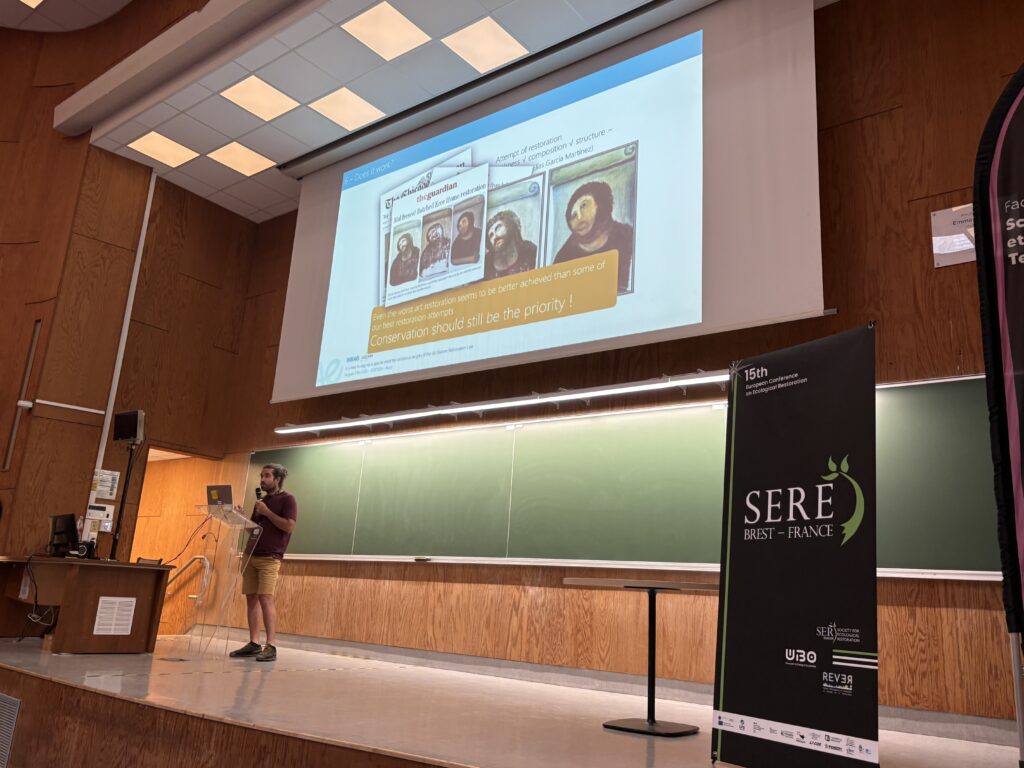
Restoration as a painting. Renaud Jaunatre, plant ecologist at LESSEM in Grenoble and president of REVER, share a memorable metaphor, drawing on the French Alps to show how restoration is taking shape at regional and national scales:
“If we compare ecosystem restoration to the restoration of a painting, we should want more than an exact copy. We should aim to recreate the conditions that allowed the painter to create it in the first place, or that allowed nature to create a mature ecosystem. We want the inspiration, which we might imagine as the species pool at the regional level. We want the right canvas and brushes, which can be the soil of the ecosystem. We want good pigments, which can be the flows of propagules. We want the social conditions that gave the painter the time to be inspired and to paint, which is the absence of external disturbances. And of course we want the long time it takes to train and develop a style of one’s own, which, for a restored ecosystem, is also simply time. So let nature take up its brushes again.” – Renaud Jaunatre
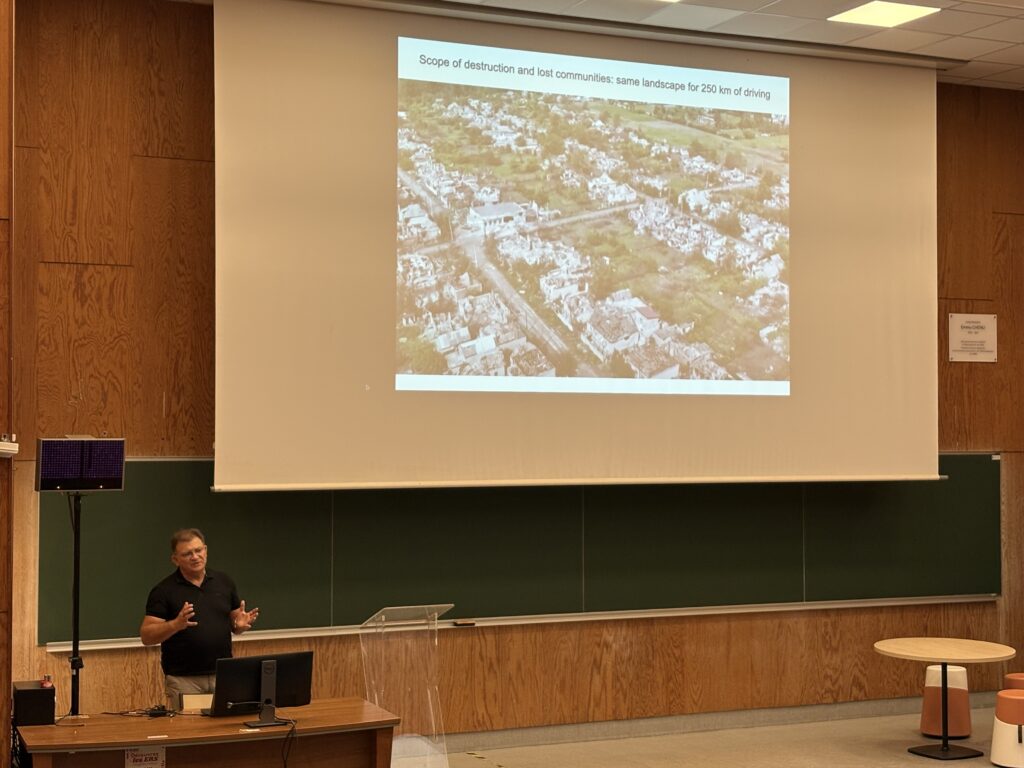
Restoration in wartime. In the final conference plenary, Bohdan Prots asked whether ecosystems can be restored in the middle of a war, and argued that they not only can be, but must be.
Drawing on work across Ukraine, he showed why waiting for peace is not an option: degraded peatlands, wetlands, and forests can pass the point of no return. He introduced the concept of Nature-based Defence, engineering wetlands, peatlands, and river corridors so they restore biodiversity and capture carbon while forming a natural barrier, resolving the false choice between the environment and defence.
When asked by SER-Europe Policy Lead Kris Decleer how the scientific community could help, Bohdan welcomed cooperation, calling for a stronger ecological restoration network in Ukraine and more partners willing to get involved. It is difficult, he said, but promising.
The SER-Europe General Meeting
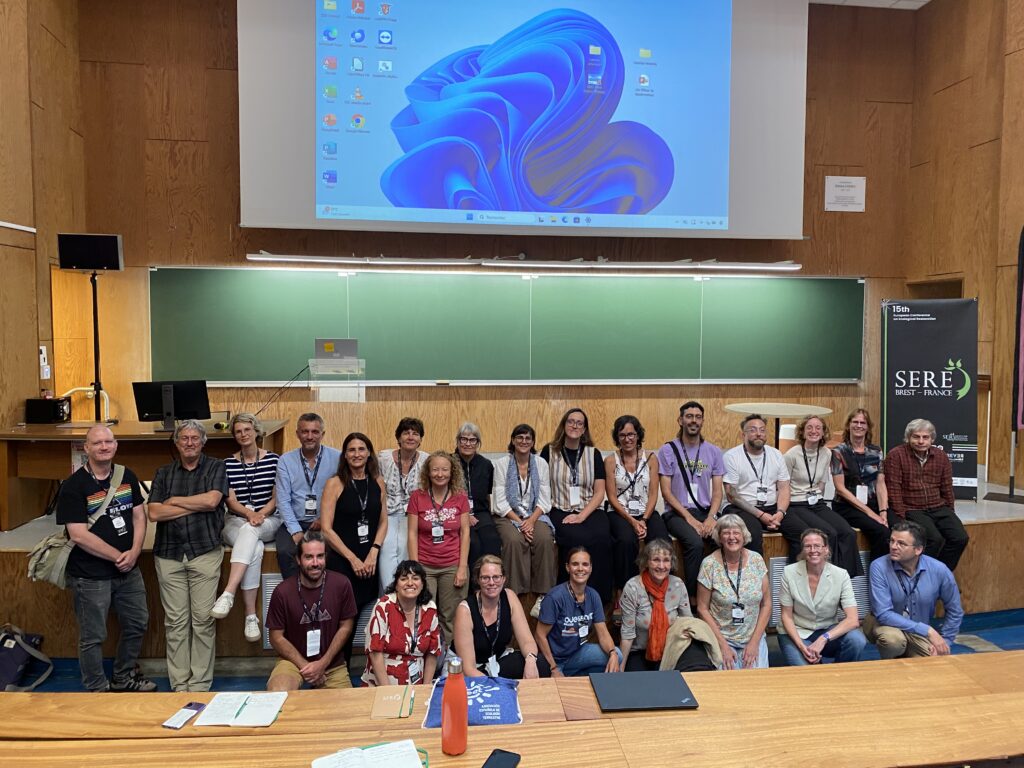
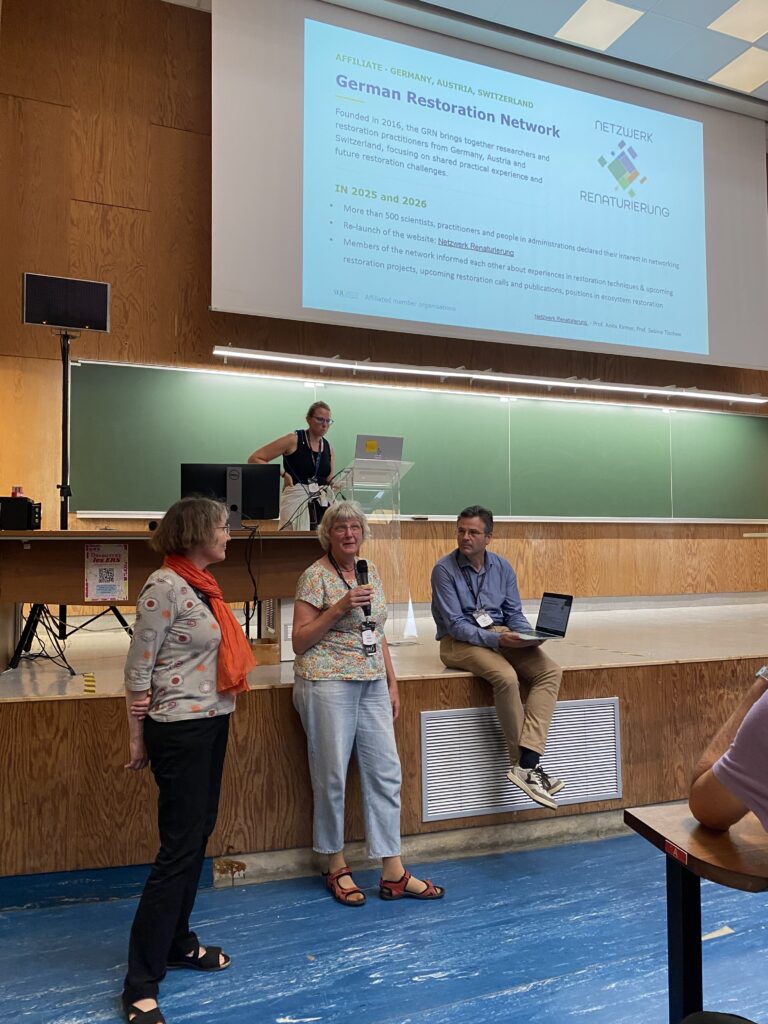
On Thursday 27 August, members gathered for the SER-Europe General Meeting. The meeting reviewed a year of real growth across the network. SER-Europe reported 461 members across Europe and 10 affiliated organisations, work on seven European projects spanning marine, wetland, forest, and urban systems, and contributions and grant revenue of nearly €225,000, more than double the previous year. The Chapter’s LinkedIn following more than doubled to over 5,400, and a new SER-Europe community on Zenodo was launched to open up its publications and track its contribution to the field.
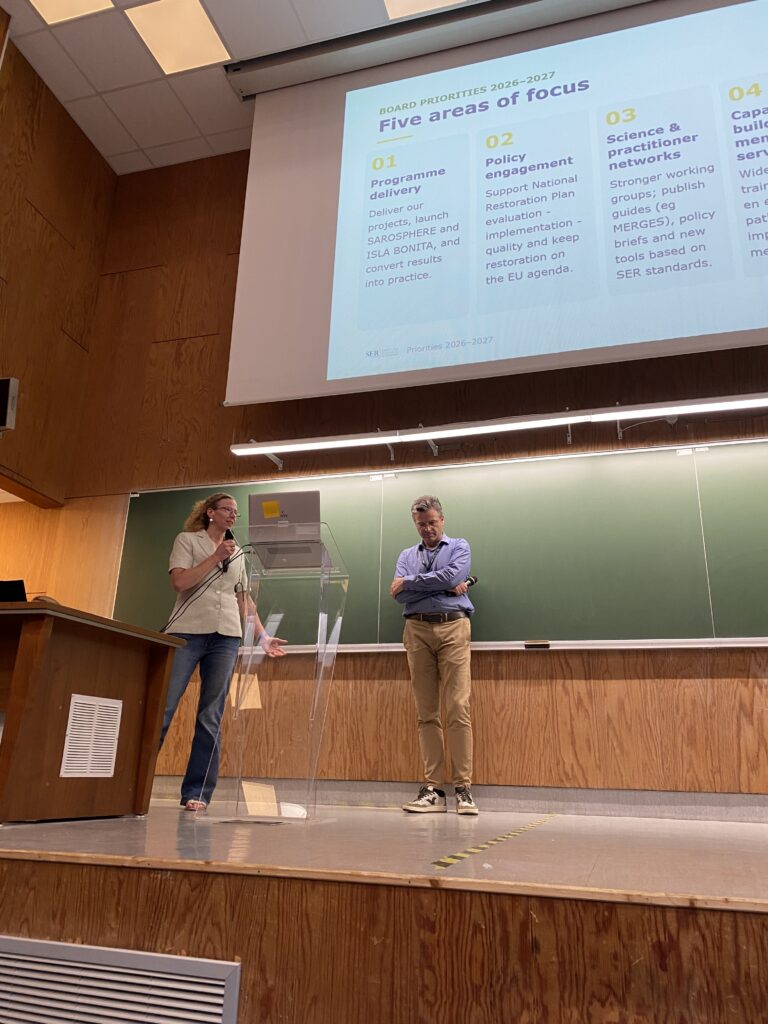
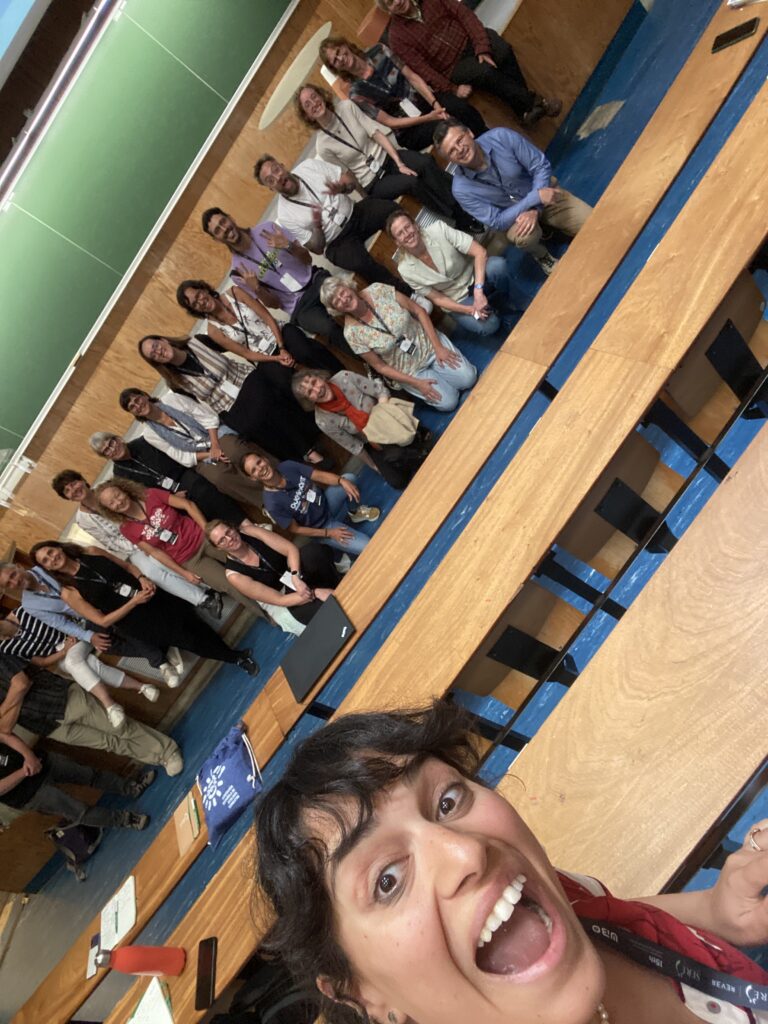
Much of the year’s work fed directly into European policy. SER-Europe contributed to DG Environment expert groups on the Nature Restoration Regulation and marine ecosystem restoration, supported the development of National Restoration Plans through dedicated workshops with experts in Spain, Italy, Hungary, and Portugal, and saw its members help shape the Technical Guidelines for assessing and monitoring Annex I habitat condition, published at the end of 2025. The Legal Working Group’s six policy briefs on the Regulation, covering agriculture, forestry, marine and urban ecosystems, and governance, were published over the year, while the Marine Restoration Working Group, now recognised by the European Commission, advanced its Marine Ecosystem Restoration Guidelines for European Seas (MERGES) and a marine adaptation of the Ecological Recovery Wheel.
The Board also set out its priorities for 2026 to 2027, organised around five areas: programme delivery, including the launch of new projects such as REBORN, SAROSPHERE, and Isla Bonita; policy engagement to support the evaluation and implementation of National Restoration Plans; stronger scientific and practitioner networks; capacity building and improved member services; and diversifying funding beyond project grants. Members were then invited to share their own views in an open roundtable, and to say where SER-Europe should focus its energy in the year ahead.
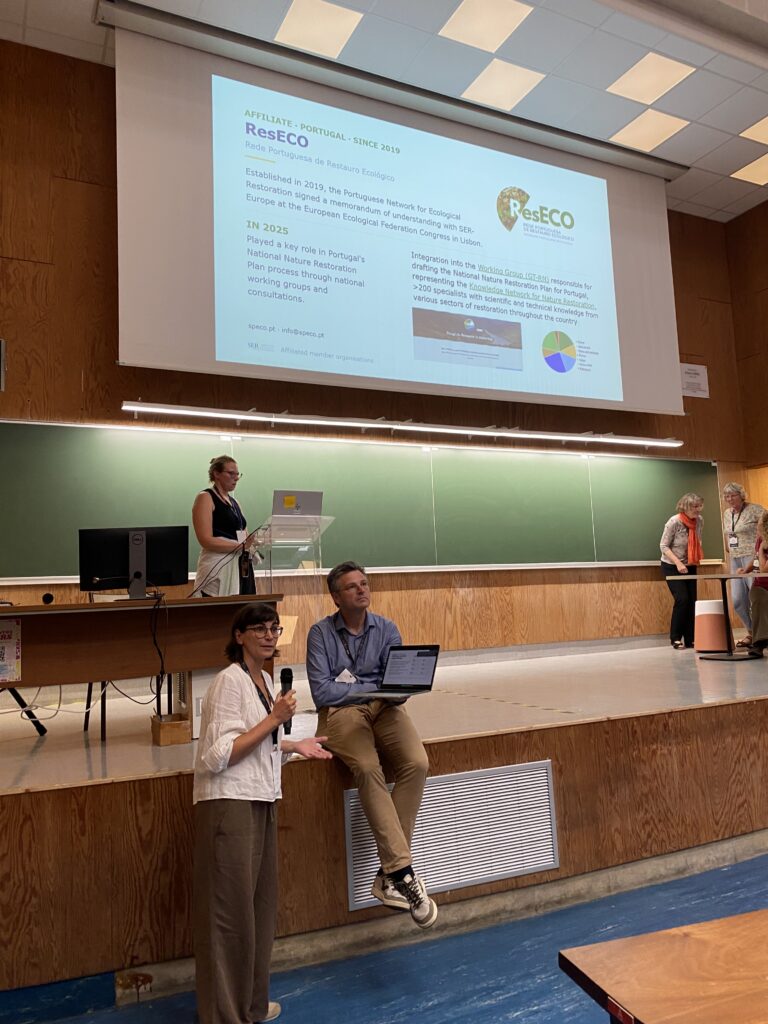
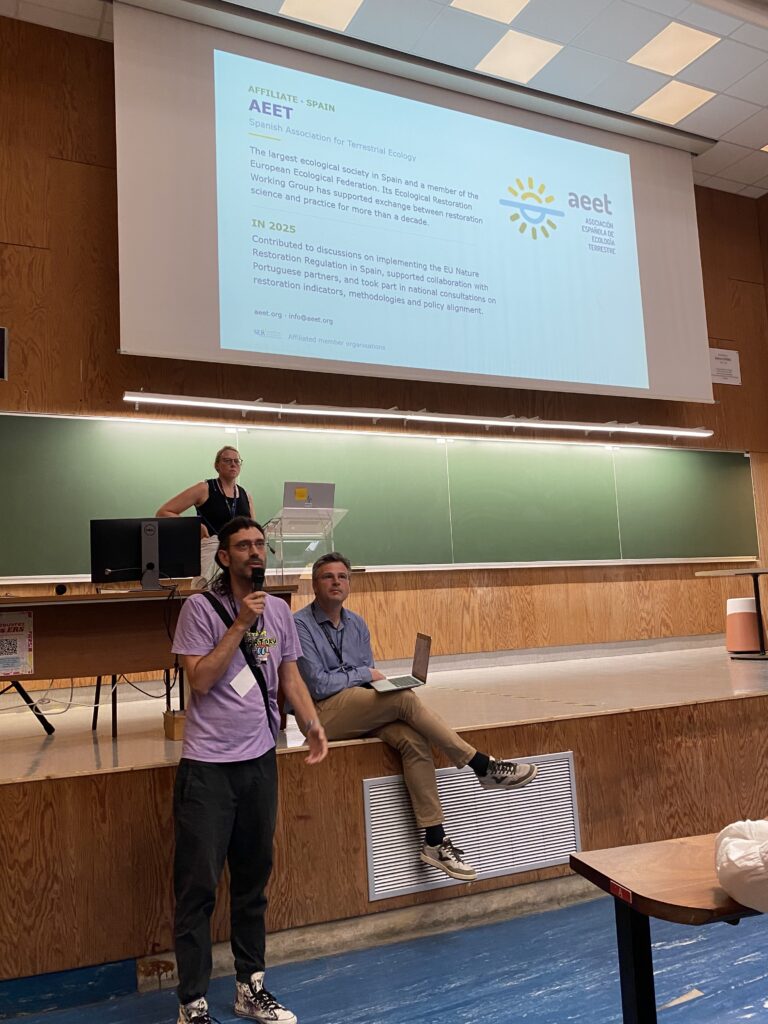
The meeting was also where the host of the next European Conference was announced.
Looking ahead: SERE2028 in Liverpool
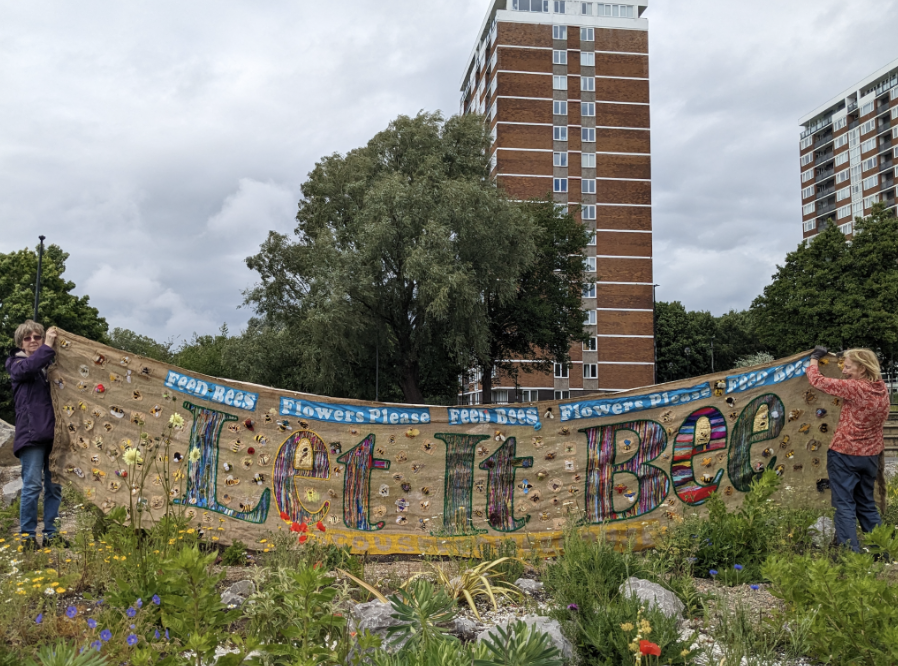
SERE2026 confirmed that the 16th European Conference on Ecological Restoration will be held in Liverpool, United Kingdom, hosted in partnership with CIEEM, the Chartered Institute of Ecology and Environmental Management and a SER-Europe affiliate, under the banner “Connecting Science, Practice and Communities.” Planning begins now, and we look forward to welcoming the restoration community to Liverpool in 2028.
The Brest Declaration
The conference closed with a Declaration, issued by the assembled scientific and professional community, demanding urgent action to tackle the climate and biodiversity crisis.
Investment in nature restoration is more urgent than ever. Inaction comes at a high cost. Nature restoration is Europe’s most cost-effective resilience strategy.
The Declaration arrives as Member States submit their first National Restoration Plans, the real test of political ambition under the Nature Restoration Regulation. It sets out four calls:
- to put healthy, resilient ecosystems at the heart of climate action;
- to ensure National Restoration Plans are science-based, sufficiently ambitious, and cost-effective;
- to recognise nature restoration as an essential investment in Europe’s resilience, prosperity, and security; and
- to deploy and upscale nature-based defence, including support for Ukraine’s green recovery.
It grounds these calls in the summer of 2026, which brought more than 35,000 estimated excess deaths linked to heat stress, over 634,000 hectares affected by wildfires, record-low river levels, and EU economic losses estimated at at least €180 billion. Against costs on that scale, the Commission’s estimate of €6 to 8.2 billion a year to implement the Regulation is modest.
The SER-Europe network of scientists, practitioners, and skilled professionals stands ready to assist Member States and the European Commission with the best available science and practical experience, in line with the SER International Principles and Standards for the Practice of Ecological Restoration.
Thank you
Our sincere thanks to the Université de Bretagne Occidentale, to REVER, to the local organising committee, and to the many volunteers whose work made SERE2026 possible, and to everyone who travelled to Brest to share their work. We look forward to continuing the conversation, and to seeing you in Liverpool in 2028.