
This week, the NORA6 conference in Cartagena brought together practitioners, researchers, policymakers, and community leaders committed to accelerating marine restoration across Europe. The event offered an important opportunity to exchange knowledge, strengthen networks, and align efforts around emerging priorities in coastal and marine ecosystem recovery.
As part of the programme, SER Europe had the honour of hosting a dedicated session on 26 November featuring:
Stefano Carboni (Native Oyster Restoration Alliance (NORA))
Richard Lilley (European Seagrass Restoration Alliance)
Prof. Joanne Preston (University of Portsmouth / UK–Ireland NON)
Ute Jacob (HIFMB / BioAgora Project / Knowledge Exchange Network for Marine Biodiversity)
Moderator: Sahar Stevenson-Jones (Marine Restoration Project Officer, SER Europe)
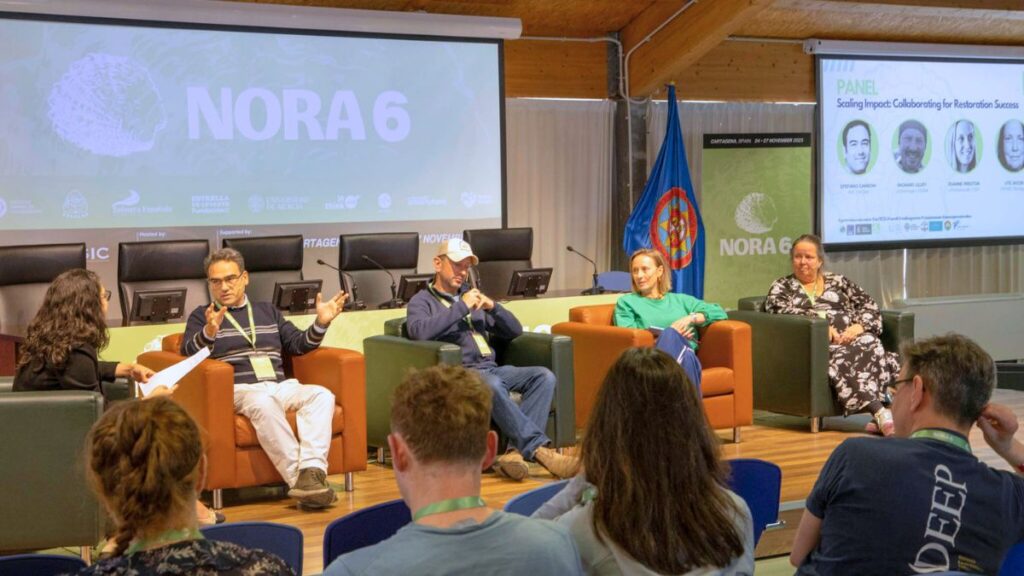
The session built on the discussions initiated at the Society for Ecological Restoration World Conference on Ecological Restoration earlier this year in Denver, continuing an important conversation on integration and collaboration in marine restoration.
Strengthening Cross-Habitat Collaboration
One of the key themes emerging from NORA6 is the need for stronger coordination across marine habitats. Whether working on oyster reefs, seagrass beds, saltmarsh, or other coastal systems, practitioners increasingly recognise that long-term success depends on approaches that consider ecological connectivity, cumulative pressures, and the benefits of coordinated action.
The SER Europe-hosted session reflected this shift. Speakers highlighted ongoing efforts within their respective networks, shared new research and practice insights, and discussed opportunities for aligning methodologies, data, monitoring frameworks, and policy support across Europe.
Socialising the Seascape-Scale Approach
Across multiple sessions and informal discussions throughout the week, the conference demonstrated growing momentum toward a seascape-scale approach to marine ecosystem restoration. This approach recognises that: marine habitats are ecologically interdependent, restoration outcomes improve when planned across larger spatial scales, and coordinated governance and stakeholder engagement are essential.
NORA6 provided a productive environment for examining how this approach can be implemented in practice, from technical considerations and ecological monitoring to knowledge exchange, community involvement, and policy alignment.
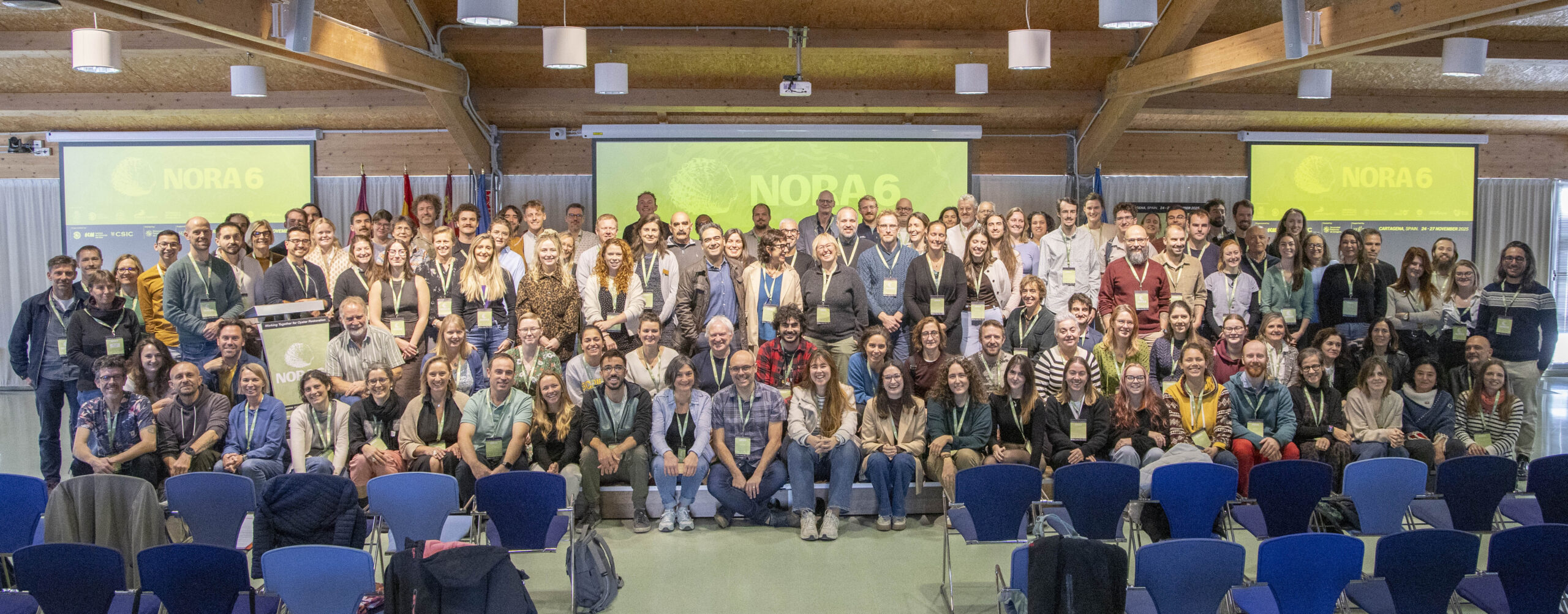
Building on Shared Progress
SER Europe welcomes the opportunity to contribute to this collaborative effort and is committed to supporting the development of restoration practices that are coherent, inclusive, and evidence-based. The discussions in Cartagena confirm that Europe’s restoration community is ready to deepen cooperation and expand the scope of shared work.
As marine restoration continues to grow in ambition and scale, events like NORA6 play an essential role in bringing together the expertise, partnerships, and shared vision needed to support healthy, resilient marine ecosystems.
SER Europe looks forward to continuing this dialogue and supporting the next steps in advancing seascape-scale restoration across Europe.
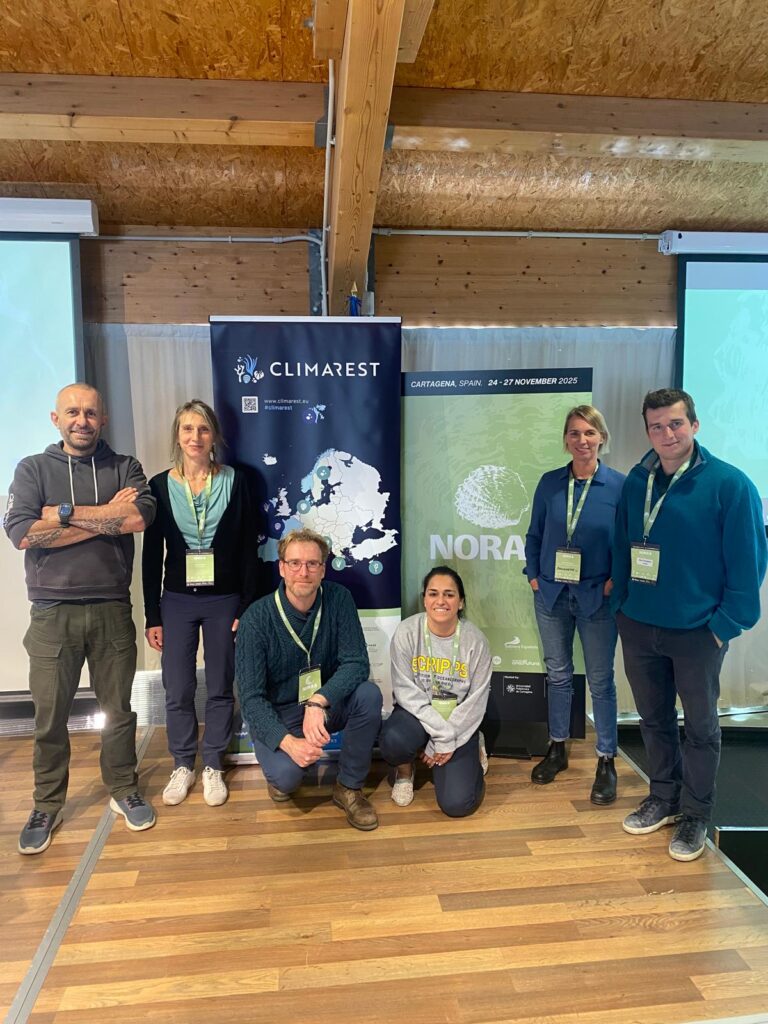
Our Marine Restoration Project Officer, Sahar Stevenson-Jones, wishes to thank Marina Albentosa, Stephane Pouvreau, Stefano Carboni, Philine zu Ermgassen and the whole team at NORA for their hospitality and kindness.