
Last week at the SER Global Conference in Denver, Colorado, our Marine Restoration Project Officer, Sahar Stevenson-Jones led a pioneering symposium that charted the course for scaling marine restoration efforts from Europe to a global stage. The session, supported by representatives by the coral reef restoration and oyster restoration communities, brought together leading experts in seagrass, kelp, saltmarsh, and mangrove restoration, alongside community-led marine management networks, to create a dynamic space for collaboration, innovation, and inspiration.
The symposium opened with Professor Roberto Danovaro (Università Politecnica delle Marche), Chair of SER Europe’s Marine Restoration Working Group (MRWG), who highlighted the eMRWG’s extensive work and its critical role in promoting seascape-scale marine ecosystem restoration, emphasising how robust frameworks and shared knowledge can drive impact across diverse habitats. Rod Connolly (Griffith University, Global Wetlands Project) then explored the potential of artificial intelligence as a collaborative tool to monitor marine restoration initiatives, demonstrating how AI can enhance restoration efforts across regions and habitats. Finally, Angus Garbutt (UK Centre for Ecology & Hydrology, UKCEH) showcased the Global Saltmarsh Breakthrough, sharing innovative frameworks that drive effective monitoring of restoration progress and highlighting the importance of seascape-scale approaches for long-term success.
The conversation then broadened to a global perspective, with a panel discussion facilitated by Benjamin Christ (Impact by Design, Inc.). Panelists included:
- Emma Jackson – World Seagrass Association & Global Seagrass Nursery Network
- Aaron Eger – Kelp Forest Alliance
- Angus Garbutt – UKCEH / Global Saltmarsh Breakthrough
- Dominic Wodehouse, PhD – Global Mangrove Alliance & Mangrove Action Project
- Alifereti Tawake – Locally-Managed Marine Area (LMMA) Network
The outcomes of this panel discussion will be synthesised by Georgia Adair (Guardian Ecology), and will combine inputs from a mirror symposium to be held at the forthcoming NORA6 Conference in Cartegena (November).
The discussion emphasised the need for a global Marine Restoration Working Group. This initiative would extend the MRWG’s collaborative model worldwide, aligning with the UN Ocean Decade objectives and providing a platform to build the “collaborations we need for the ocean we want.”
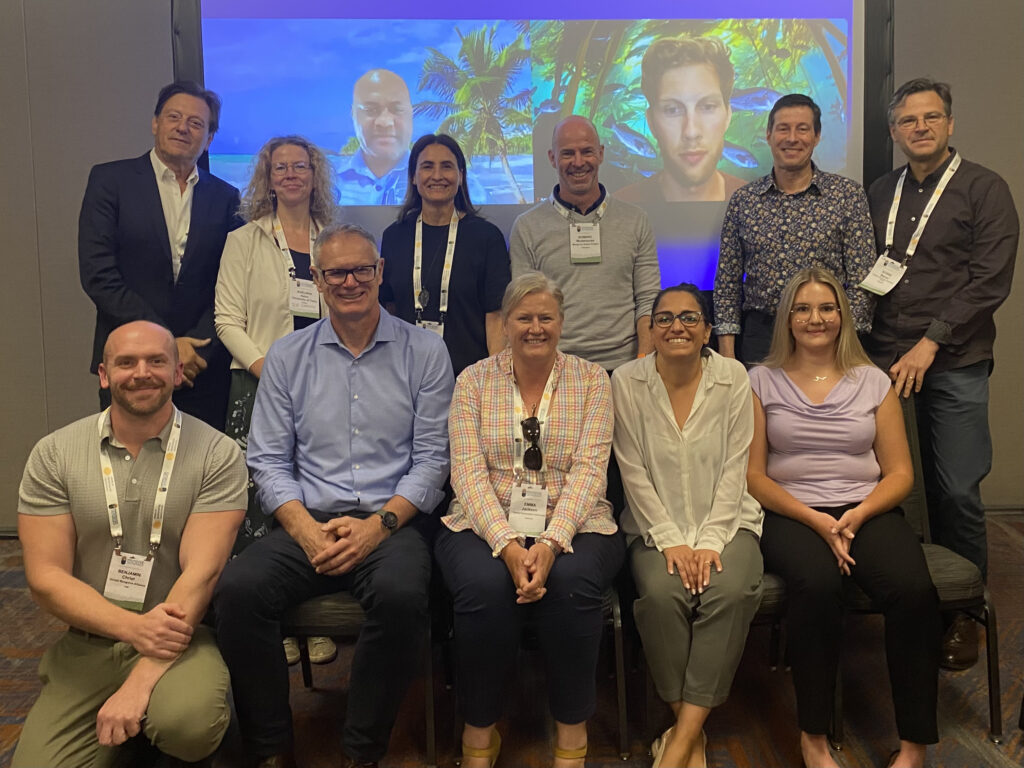
The symposium celebrated diverse expertise and perspectives, from cutting-edge science to community-led stewardship, and sparked meaningful dialogue on opportunities, challenges, and priorities for advancing marine restoration globally. It underscored the potential of collaborative frameworks, shared tools, and international partnerships to achieve large-scale ecological impact. This symposium represented a crucial step forward in making waves for the future of marine restoration, demonstrating that the scale of our ambition must match the scale of the ocean’s challenges.
A heartfelt thanks goes to Boris Barov, Cristina Gambi, Keith MacCallum, Georgia Adair, Aveliina Helm, and Jordi Cortina-Segarra for their support in making the session possible, and to Boze Hancock, Prof Joanne Preston, Alison Debney, Tundi Agardy, Phanor Montoya-Maya, and all colleagues continuing to inspire this journey.